
The Police Academy Pathway: From Enrollment to Sworn Officer
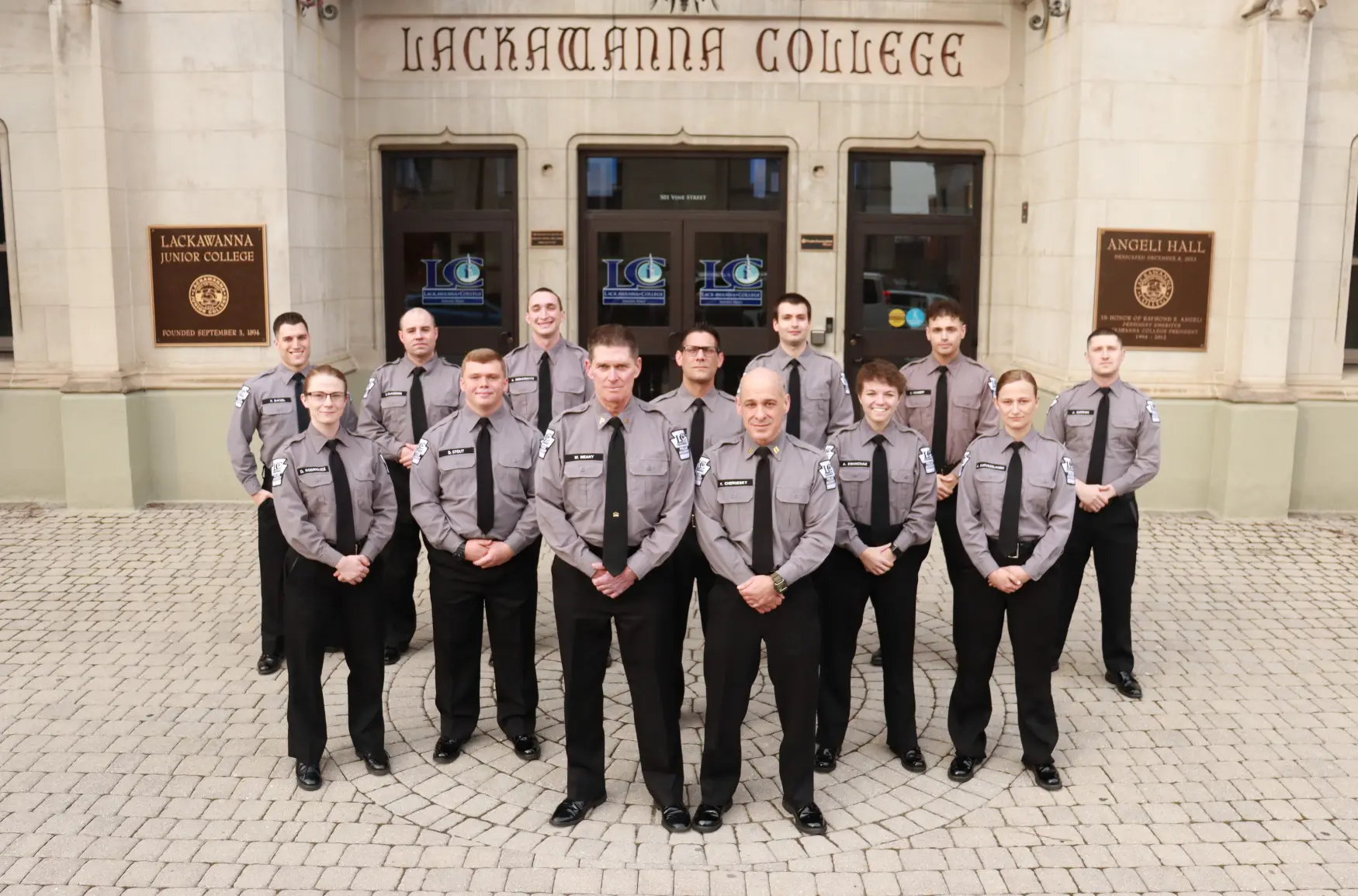
Every municipal police officer in Pennsylvania starts in the same place. That place is an Act 120 academy certified by the Municipal Police Officers’ Education and Training Commission (MPOETC). No department in the state can hire you as a local officer without that card. So the real question is not which academy is closest. It is which one gets you through training, past the state exam, and into a uniform.
Lackawanna College has trained police officers in Northeastern Pennsylvania for more than 45 years. The academy runs at two campuses: Scranton (Main Campus) and the Hazleton Center. It offers all three of the state’s core law enforcement programs. Act 120 trains new officers. Act 180 keeps active officers current. Act 235 certifies armed security workers. This post walks the full path, from your first form to the day you can be sworn in.
What Act 120 Certification Is
Act 120 is the basic training rule for municipal police officers in Pennsylvania. MPOETC, the state board that governs police training, sets the coursework. It now totals 946 hours of mandated instruction. Every cadet in every certified academy covers the same core material. What differs is how well each academy gets you ready to pass.
Training covers criminal law, vehicle law, patrol work, firearms, defensive tactics, emergency driving, and fitness. Lackawanna College’s academy adds hands-on work that mirrors the job. Cadets get simulated weapons training and mental health first aid. They also learn how to respond to child abuse and domestic violence calls.
When you finish, you sit for the MPOETC exam. Pass it, and you can be hired and sworn in as a local officer anywhere in the state.
Key Takeaway: Act 120 is the mandatory 946-hour training program for municipal police officers in Pennsylvania. You cannot be hired as a municipal officer in the state without it.
Step 1: Meet the Entry Requirements
Before the academy will look at your file, you need to clear four basic rules. You must be 18 when you apply. You must have a high school diploma or a GED. You must hold a valid driver’s license. And you must be a United States citizen.
Notice what is not on that list: a college degree. The academy is open to new high school grads and career changers alike. Meet the four rules, pass the screenings, and you are in the running.
Step 2: Apply and Pass the Screenings
Windows open several months before each class starts. Screening takes time, so apply early. Two classes are on the calendar now. Class 267 at the Hazleton Center begins October 7, 2026. Its window opened April 8, 2026. Class 268 at Scranton begins January 11, 2027. Its window opens July 12, 2026.
After you apply, you complete the required screenings. There are four: a fitness test, a reading test, a psychological evaluation, and background checks. None are meant to trick you. Departments will hold you to the same bar when they hire. The academy just checks up front.
Questions about applying? Reach Police Academy admissions at thompsonj@lackawanna.edu or call 570-961-7874.
Key Takeaway: Class 267 (Hazleton Center) starts October 7, 2026. Class 268 (Scranton) starts January 11, 2027, with applications opening July 12, 2026. Admission requires a fitness test, reading test, psychological evaluation, and background checks.
Step 3: Complete the Training
The full-time academy runs about 6.5 months. Classes meet mostly Monday through Friday. Some evening and weekend sessions occur. Expect classroom work plus physical, hands-on training. This is not a program you sit through. Cadets train in firearms, defensive tactics, and emergency driving along with the legal coursework. Fitness work runs the whole way. Keep training between the fitness screening and day one, and you will have an easier road.
The schedule is demanding, and that is by design. Police work does not follow a neat calendar. The academy builds the habits that departments expect. Show up early. Stay sharp when you are tired. Follow procedure under pressure.
Treat the academy like the job interview it is. Departments across Northeastern Pennsylvania know Lackawanna College’s academy. Instructors see who comes prepared, who works hard, and who handles stress well. Your name as an officer starts building on day one.
Step 4: Pass the MPOETC Exam and Get Sworn In
The academy’s job is to get you past the state exam. The record here is strong. From May 2022 through July 2025, Lackawanna College reports a combined MPOETC certification rate of 99.54% across its academy classes.
The card alone does not make you a police officer. It makes you hireable. From there, you apply to departments and complete each department’s own hiring process. You take the oath when you are hired. Many cadets start applying before they graduate, so the two timelines overlap.
Key Takeaway: Lackawanna College reports a combined 99.54% MPOETC certification rate from May 2022 through July 2025. Certification makes you eligible for hire as a municipal police officer anywhere in Pennsylvania.
What the Academy Costs
Tuition for the Act 120 program is $8,500. Plan for roughly $1,000 in fees on top. The fees cover the application fee, fitness and reading tests, psychological evaluation, background checks, uniforms, and gear. Financial aid is available. The college’s financial aid office can walk you through options before you commit.
Now weigh the payoff. Per the program page, the law enforcement field is expected to grow by 7% over the next ten years. Officers earn between $40,420 and $105,540. Pay depends on experience, industry, and specialty. For training measured in months, not years, the math is hard to argue with.
After the Academy: The Degree Pathway
Here is the part most future cadets miss. Finishing the Lackawanna College Police Academy counts as 21 credits toward a Lackawanna College Criminal Justice degree. Your academy time is not an academic dead end. It is a head start.
The Bachelor of Science in Criminal Justice is open enrollment. It has fall, spring, and summer start dates. The college also offers an Associate of Science in Criminal Justice. A degree matters over the length of a career: promotions to detective, supervisor, and command roles favor officers who hold one. In the two most recent reported years, 75% of Criminal Justice degree graduates (2023-24) and 67% (2024-25) were placed in jobs.
Key Takeaway: Academy completion counts as 21 credits toward a Lackawanna College Criminal Justice degree. The Bachelor of Science in Criminal Justice is open enrollment with fall, spring, and summer starts.
Act 235 and Act 180: The Other Two Pathways
Act 120 is not the only law enforcement training at Lackawanna College. Two related programs serve different needs.
Act 235 is Pennsylvania’s Lethal Weapons Training Act card. Anyone who carries a firearm or lethal weapon for work must hold it. That includes armed security, protective patrol, and private investigation. The first-time course is 40 hours: 26 in class and 14 hands-on. It costs $350 with firearms training or $250 without. Recertification is 8 hours. That costs $225 with firearms or $200 without. Classes run evenings and weekends at the Leach Range in Scranton and the Silverbrook Range at the Hazleton Center. Lackawanna College students report a 98% first-time pass rate on the Pennsylvania Attorney General’s Office exam. For some students, Act 235 is a career in itself. For others, armed security work is a paycheck and real-world experience while they wait for an Act 120 class to start.
Act 180 is the yearly in-service training that keeps certified officers certified. All officers must complete 12 hours each year to keep their Act 120 card. The training covers changes in criminal and vehicle law, plus elective coursework.
Key Takeaway: Act 235 certifies armed security professionals in a 40-hour program ($250–$350). Act 180 is the 12-hour annual in-service training that maintains an officer’s Act 120 certification.
How to Start
The path is simple to describe and demanding to finish. Meet the entry rules. Apply during the open window. Pass the screenings. Finish 946 hours of training. Pass the MPOETC exam. From first form to sworn officer, most cadets need under a year of focused effort.
Does the October class in Hazleton or the January class in Scranton fit your timeline? Start with the Police Academy (Act 120) program page. Then reach out to academy admissions with questions. The windows are open now or opening soon. Screening rewards the people who start early.
Future cadets can also connect with Lackawanna College on LinkedIn to see where recent graduates have landed, or follow the college’s YouTube channel for a closer look at student life on campus.
Frequently Asked Questions
How long does the Pennsylvania police academy take?
The full-time Act 120 program at Lackawanna College runs about 6.5 months. It includes 946 hours of MPOETC-mandated training. Classes meet mostly Monday through Friday, with some evening and weekend sessions. After the academy, graduates sit for the MPOETC exam. Passing it makes them eligible for hire as municipal police officers in Pennsylvania.
How much does the police academy cost at Lackawanna College?
Tuition for the Act 120 Police Academy program is $8,500, plus about $1,000 in fees. The fees cover the application fee, fitness and reading tests, psychological evaluation, background checks, uniforms, and gear. Financial aid is available. Academy completion also counts as 21 credits toward a Lackawanna College Criminal Justice degree.
What is the difference between Act 120 and Act 235 in Pennsylvania?
Act 120 is the mandatory basic training for municipal police officers in Pennsylvania. It totals 946 hours of MPOETC-mandated instruction. Act 235 is the Lethal Weapons Training Act card. Anyone who carries a firearm or lethal weapon for work needs it, such as armed security or private investigators. Act 235 is a 40-hour program. Act 120 takes about 6.5 months full-time. Lackawanna College offers both at its Scranton and Hazleton locations.
Do I need a college degree before attending the police academy?
No. The Lackawanna College Police Academy asks four things. Be 18 when you apply. Hold a high school diploma or GED. Have a valid driver’s license. Be a United States citizen. Applicants must also pass a fitness test, reading test, psychological evaluation, and background checks. Many officers add a Criminal Justice degree later. Academy completion counts as 21 credits toward a Lackawanna College Criminal Justice degree.
When is the next police academy class at Lackawanna College?
Class 267 at the Hazleton Center begins October 7, 2026, with applications open as of April 8, 2026. Class 268 at Scranton (Main Campus) begins January 11, 2027, with applications opening July 12, 2026. Apply early. Admission requires a fitness test, reading test, psychological evaluation, and background checks before the class starts.
Can I work while attending the police academy?
The full-time Act 120 program runs about 6.5 months. Classes meet mostly Monday through Friday, plus some evening and weekend sessions. A regular daytime job is hard to keep during training. The schedule is demanding by design, and fitness work runs the whole way. Some students work armed security under an Act 235 card while they wait for an Act 120 class to start. It provides a paycheck and real-world experience. For questions about balancing work with the academy schedule, contact Police Academy admissions at thompsonj@lackawanna.edu or 570-961-7874.