
Vascular Sonography Careers: Diagnosing Circulatory Disease in 2 Years
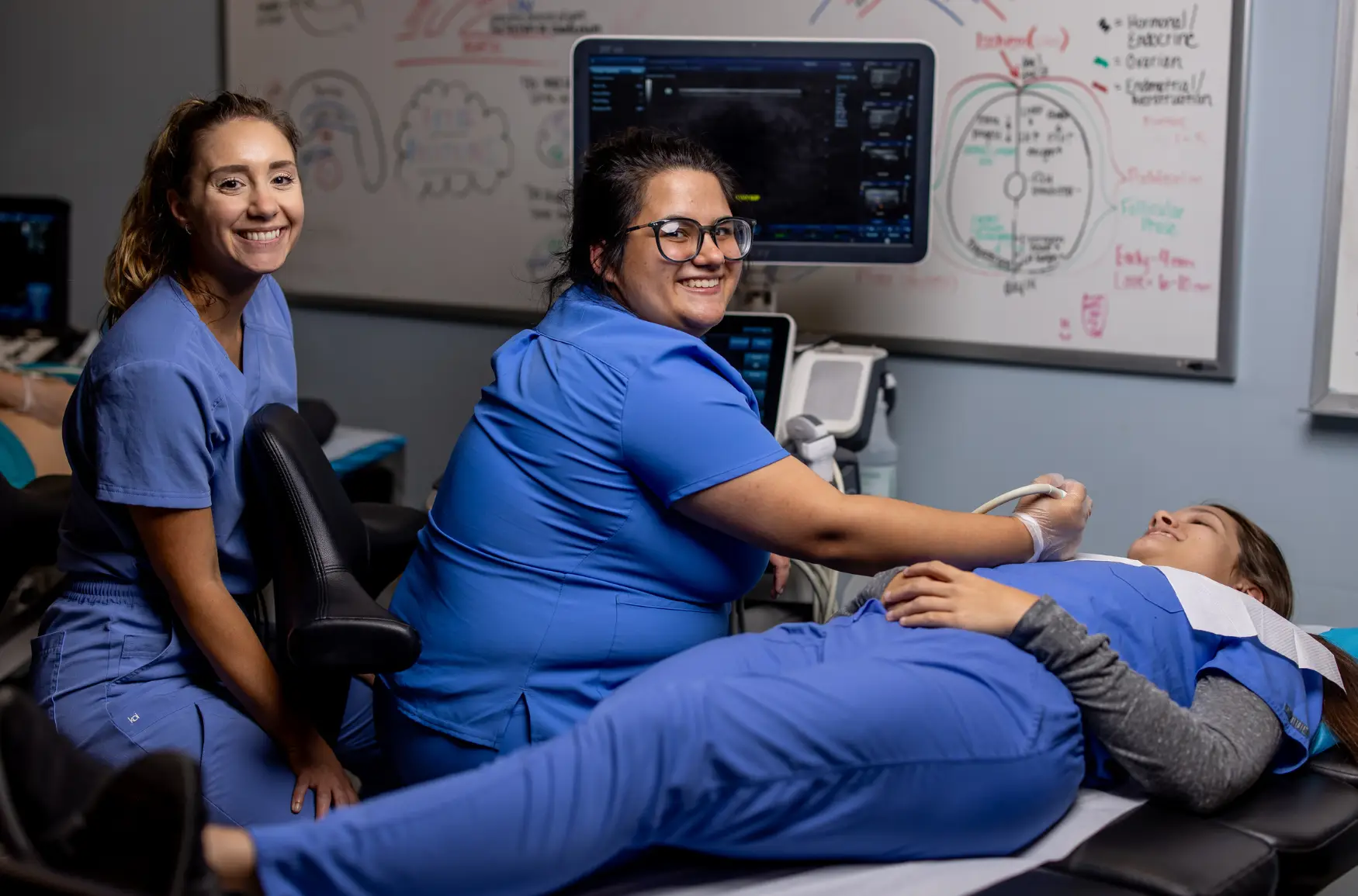
A blocked artery rarely announces itself. Plaque builds quietly for years. A blood clot can form in a deep leg vein with little warning. By the time vessel disease causes a stroke or threatens a limb, the damage is often done. Vascular sonographers find these problems early. They use sound waves, not scalpels or radiation. That gives doctors time to treat trouble before it becomes an emergency.
It is a hands-on health career with real diagnostic weight. It does not require a four-year degree. Lackawanna College’s Associate Degree in Vascular Ultrasound is a two-year, four-semester program. It runs at the Scranton campus. The Commission on Accreditation of Allied Health Education Programs (CAAHEP) accredits the program. Its 2024 grads posted a 100% vascular credential success rate and a 100% employment rate (college-reported). This guide covers the job, the demand, the credentials, and how the program works.
What a Vascular Sonographer Does All Day
A vascular sonographer images the body’s blood vessels. That means the arteries that carry blood away from the heart, and the veins that carry it back. The tool is a handheld transducer and an ultrasound machine. It captures pictures of vessel walls and measures how blood moves through them. The images show what doctors cannot see from the outside. Plaque narrowing an artery. A clot blocking a vein. A weak vessel wall bulging into an aneurysm.
The daily work mixes patient care with technical skill. A shift might include carotid artery studies, which help assess stroke risk. It might include deep vein studies to rule out clots in a patient’s legs. Arm and leg artery studies map blood flow problems. Sonographers position patients and explain each exam. They capture the images and pass their findings to the doctors who read them. This role is patient-facing all day. It fits people who want technical work and human contact in the same job.
Vascular sonographers work in hospitals, primary clinics, physician offices, and medical and diagnostic laboratories. The work is precise and detail-driven. A missed measurement can mean a missed diagnosis. That is why employers want grads of accredited programs who hold national credentials.
Key Takeaway: Vascular sonographers use ultrasound to image arteries and veins. They help doctors catch clots and blockages early. The role blends patient care with technical skill in hospitals, clinics, physician offices, and diagnostic labs.
Why Demand for Vascular Sonographers Keeps Growing
Vessel disease is one of the most common health problems in the United States. It grows more common as people age. Each year of that shift means more carotid studies, more clot checks, and more vascular exams. At the same time, medicine keeps moving away from invasive tests. Ultrasound uses no radiation and needs no incision. So it is often the first imaging tool a doctor reaches for when a vessel problem is suspected.
More patients need vascular imaging. More doctors choose ultrasound first. That is what drives hiring. Hospitals and imaging centers across Northeastern Pennsylvania and beyond need registered sonographers to keep up. The [U.S. Bureau of Labor Statistics](https://www.bls.gov/ooh/healthcare/diagnostic-medical-sonographers.htm) projects 13% job growth for diagnostic medical sonographers from 2024 to 2034. That is much faster than the average for all occupations. On pay, BLS reports a Pennsylvania median of $82,710 as of May 2025. Most sonographers in the state earn between $68,370 and $103,570. The national median runs higher at $96,590. New grads start toward the low end. Skilled, credentialed sonographers in hospitals sit toward the top.
Key Takeaway: An aging population and the shift toward non-invasive imaging keep vascular sonography in demand. The U.S. Bureau of Labor Statistics projects 13% growth for diagnostic medical sonographers from 2024 to 2034. It reports a Pennsylvania median of $82,710 as of May 2025, with most in the state earning between $68,370 and $103,570.
The Credentials: ARDMS, CCI, and the RVT
In sonography, the credential is the career currency. Employers hire registered sonographers. You register by passing national exams. Two bodies matter most in vascular work. One is the American Registry for Diagnostic Medical Sonography (ARDMS). The other is Cardiovascular Credentialing International (CCI). The ARDMS Registered Vascular Technologist (RVT) credential is one of the most widely known marks of skill in the vascular field.
Lackawanna College’s Vascular Ultrasound program is built to prep students for the ARDMS and CCI exams. The results show it. The program reported a 100% vascular credential success rate for its 2024 grads. Every grad who sat for the vascular credential passed. For a future student, that number matters more than almost any other. It says the program teaches what the registry tests and what employers expect on day one.
Key Takeaway: Employers hire registered sonographers, and the RVT is the leading vascular credential. Lackawanna College’s 2024 grads posted a 100% vascular credential success rate.
Inside the Associate Degree in Vascular Ultrasound
The Associate Degree in Vascular Ultrasound is a two-year, four-semester program. It totals 70 credits at Lackawanna College’s Scranton campus in Northeastern Pennsylvania. It is accredited, upon the recommendation of the JRC-DMS, by the Commission on Accreditation of Allied Health Education Programs (CAAHEP). That is the standard employers and credential boards look for.
Coursework builds from foundation to specialty. Students start with Medical Terminology, Anatomy & Physiology, Introduction to Patient Care, and Introduction to Ultrasound Physics. Then they move into vascular-specific study, including arm and leg artery studies, plus Medical Ethics. The physics matters more than most applicants expect. Knowing how sound waves act in tissue is what separates a sonographer from someone who just holds a transducer.
Clinical rotations are woven through the program. Students work in real imaging settings with real patients. All coursework must be done before a student enrolls in Clinical III. That rule makes sure students walk into their most advanced rotation ready. By graduation, students have scanned real patients under supervision, not just classmates.
Key Takeaway: The Associate Degree in Vascular Ultrasound is a 70-credit, four-semester, CAAHEP-accredited program at the Scranton campus. Students move from foundational science into vascular-specific coursework and hands-on clinical rotations.
Selective Admission: What It Takes to Get In
This is not an open-enrollment program. It is selective. Lackawanna College admits at most 25 students each year. The deadline to apply is June 1. Small cohorts keep clinical placements meaningful and instructor attention high. They also mean applicants need to plan ahead.
Here are the published rules. Applicants need a high school diploma or GED. They need Biology or Anatomy & Physiology with a grade of C or better. Test scores count too: a recommended 500 Verbal and 500 Math on the SAT, a 20 or higher per section on the ACT, or “College Ready” ACCUPLACER scores. Transfer credits must carry a 3.0 GPA or higher.
The process has two layers. First, applicants complete the college application and a separate Sonography Program Application. Top applicants are invited to interview. Accepted students finish the last steps before starting. Those include CPR certification, FBI, State, and PA Child Abuse clearances, a PPD test, a physical exam, Hepatitis B vaccination, and two letters of recommendation.
None of this should scare anyone off. It should shape the timeline. Take Biology or Anatomy & Physiology seriously in high school. Gather materials early. Get the application in well before June 1.
Key Takeaway: Admission is selective — at most 25 students per year, a June 1 deadline, and a two-step application with an interview. Applicants who line up the required classes early put themselves in the strongest position.
Cardiac, Vascular, or General: Picking Your Sonography Path
Vascular ultrasound is one branch of a larger field. Cardiac sonographers image the heart itself: its chambers, valves, and pumping motion. Vascular sonographers image the vessel network that carries blood everywhere else. General diagnostic medical sonographers image organs and tissue across the body. All three paths share the same core technology. All three follow the same two-year associate degree structure at Lackawanna College.
The right choice comes down to two things. Which anatomy holds your interest, and what kind of patient work do you want? Weighing the heart against the vessels? Read our companion guide, What Does a Cardiac Sonographer Do? Career Path, Salary, and Training in Pennsylvania. It breaks down that specialty the same way this guide covers vascular work.
How to Take the Next Step
Vascular sonography offers something rare. It is a two-year path to a credentialed diagnostic career. The 2024 graduating class earned a 100% employment rate (college-reported). For students in Northeastern Pennsylvania who want health work with technical depth and daily patient contact, it is one of the strongest routes around.
Start with the Vascular Ultrasound program page for full rules and curriculum details. Or request information to have an admissions team member reach out. Remember the June 1 deadline. Selective programs reward students who move early.
Students can also connect with Lackawanna College on LinkedIn to see where recent graduates have landed, or follow the college’s YouTube channel for student stories from the college’s health sciences programs.
Frequently Asked Questions
How long does it take to become a vascular sonographer?
Two years, if you choose an accredited associate degree path. The Associate Degree in Vascular Ultrasound at Lackawanna College is a two-year, four-semester program totaling 70 credits, offered at the Scranton campus. Graduates leave ready to sit for the ARDMS and CCI registry exams. Most employers expect those credentials. That means a student can move from high school graduate to credentialed vascular sonographer in about two years.
What is the difference between vascular sonography and cardiac sonography?
Vascular sonographers image the blood vessels — the arteries and veins that carry blood through the body. They find clots, blockages, and narrowed or weakened vessels. Cardiac sonographers image the heart itself, capturing its chambers, valves, and pumping motion. Both specialties use the same core ultrasound technology. Both are two-year associate degree paths at Lackawanna College. Students comparing the two can read the college’s cardiac sonography career guide for a full breakdown of that specialty.
What credentials do vascular sonographers earn?
Most vascular sonographers register through one of two bodies. One is the American Registry for Diagnostic Medical Sonography (ARDMS). The other is Cardiovascular Credentialing International (CCI). The ARDMS Registered Vascular Technologist (RVT) credential is one of the most widely known marks of skill in the vascular field. Lackawanna College’s Vascular Ultrasound program preps graduates for the ARDMS and CCI exams. The program reported a 100% vascular credential success rate for its 2024 graduates.
Is the Vascular Ultrasound program hard to get into?
It is selective. Lackawanna College admits at most 25 students to the Vascular Ultrasound program each year, and the deadline to apply is June 1. Applicants need a high school diploma or GED, a grade of C or better in Biology or Anatomy & Physiology, qualifying test scores, and a separate Sonography Program Application. Top applicants are invited to interview. Students who plan ahead — lining up the required classes and applying early — put themselves in the strongest position.
How much do vascular sonographers make?
Pay depends on experience, credentials, and work setting. The U.S. Bureau of Labor Statistics reports a Pennsylvania median of $82,710 for diagnostic medical sonographers as of May 2025. Most sonographers in the state earn between $68,370 and $103,570. New graduates usually start toward the lower end of that range. Skilled, credentialed sonographers in hospital settings earn toward the top. Demand for non-invasive vascular imaging keeps growing, which supports earning power over a full career.
Is Lackawanna College’s Vascular Ultrasound program accredited?
Yes. The Associate Degree in Vascular Ultrasound is accredited, upon the recommendation of the JRC-DMS, by the Commission on Accreditation of Allied Health Education Programs (CAAHEP). Accreditation matters. Employers look for graduates of accredited programs who hold national credentials. A CAAHEP-accredited program is the expected prep for the ARDMS and CCI registry exams. The program is offered at Lackawanna College’s Scranton campus in Northeastern Pennsylvania.