
Petroleum Technician Careers: A Path Into Pennsylvania’s Energy Sector
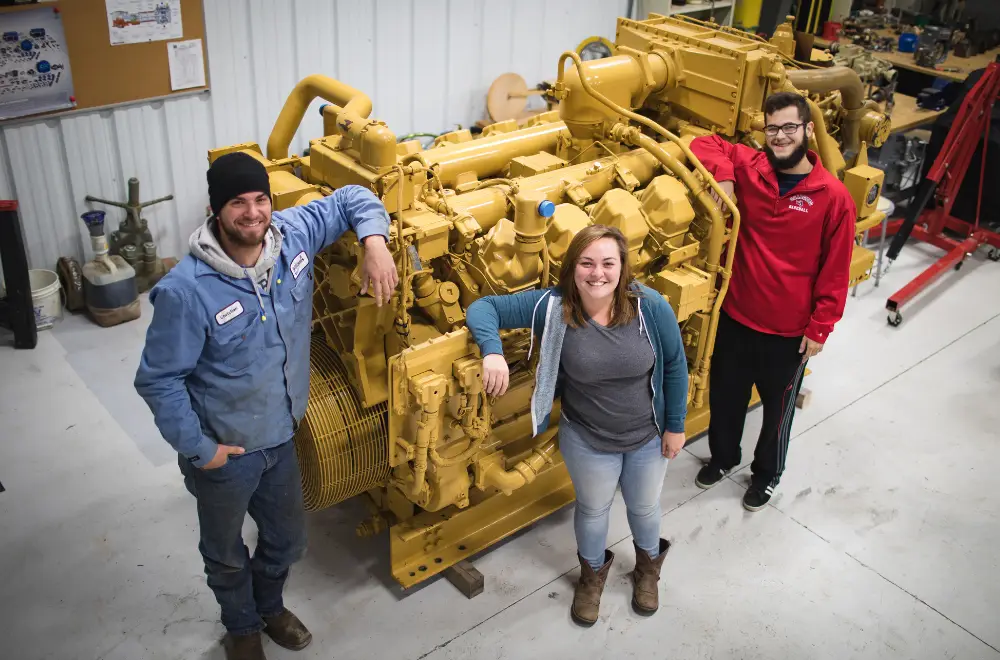
A petroleum technician works hands-on in natural gas and oil production. The job means running lease sites and watching compressor stations. It also means keeping up pipelines and keeping wells safe. In Pennsylvania, that work sits in the Marcellus Shale region of Northeastern Pennsylvania (NEPA). A wave of retirements there is opening steady entry points for trained newcomers. Lackawanna College trains technicians for that regional workforce. Lackawanna College is a nonprofit, founded in 1894 and accredited by the Middle States Commission on Higher Education. Its School of Petroleum & Natural Gas runs out of the Tunkhannock Center. This guide covers what the work involves and what it pays. It also covers how the training path works if you are starting from zero.
What Does a Petroleum and Natural Gas Technician Do?
A petroleum and natural gas technician keeps field equipment running. The day-to-day work shifts by role. Most of it comes down to watching, fixing, and troubleshooting the gear. That gear moves gas and oil from the ground to market.
Common job titles include lease operator, field technician, and operations technician at midstream sites. Compressor or engine mechanic is another common title. Lease operators check wellheads and tanks. They log readings and step in when something goes wrong on site. Compressor and engine mechanics keep the engines that push gas through pipelines running. They use test tools and torque steps built for that gear. None of these jobs need an office background. Most of the work happens outdoors or in a shop bay. It mixes hard labor with technical judgment.
Key Takeaway: “Petroleum technician” is not one job title. It is a track that covers lease work, midstream operations, and engine repair. Each role has its own routine. All of them rest on the same base: field safety and equipment know-how.
Why Pennsylvania’s Energy Sector Needs Technicians Now
Pennsylvania sits on top of the Marcellus Formation. It is a Devonian-age shale layer that runs through the Appalachian Basin. It holds one of the largest natural gas supplies in the country. The formation runs under most of the state. It includes the counties the Tunkhannock Center serves: Wyoming, Luzerne, Lackawanna, Bradford, Sullivan, and Susquehanna.
That geology built an industry. Now that industry has a staffing problem. About half of the current petroleum and natural gas workforce is set to retire soon. That wave will hit over the next five to seven years. Pennsylvania already ranks sixth in the country for geological and petroleum technician jobs. Production firms, midstream operators, and pipeline firms across NEPA are hiring to close that gap. They are growing and backfilling the people who leave.
Key Takeaway: The retirement wave over the next five to seven years drives hiring in Pennsylvania. That is happening right now. Industry growth plays a smaller role.
What Petroleum Technician Careers Pay
Wages here shift by role and by how specialized the gear is. The U.S. Bureau of Labor Statistics tracks pay by occupation through its Occupational Employment and Wage Statistics survey. In the May 2025 data for Pennsylvania, roustabouts in oil and gas (SOC 47-5071) had an annual median wage of $47,520. That is an entry-level field job. Skilled plant work pays more. Petroleum pump system operators, refinery operators, and gaugers (SOC 51-8093) had a Pennsylvania annual median of $83,870. Those roles sit at refinery and pipeline sites rather than in entry-level field work.
Statewide numbers cover a wide mix of settings, from refineries to remote wellheads. They will not match every local job. On the training side, Lackawanna College reports on graduate outcomes. 93% of graduates of its petroleum and natural gas technology program are hired. Those hires go to petroleum and gas firms. The college also reports a median wage of $47,380 for geological and petroleum technicians. Pay and job security both matter in the technician track. For a closer look, see the benefits of becoming a petroleum and natural gas technician.
Key Takeaway: Pay swings a lot by role. Entry-level field jobs and skilled plant jobs sit far apart on the wage scale. It helps to know which track you are training for.
Training Paths at Lackawanna College’s School of Petroleum & Natural Gas
The School of Petroleum & Natural Gas operates only out of the Tunkhannock Center in Tunkhannock, Pennsylvania. Three programs there train for the technician track.
The Associate in Science in Petroleum & Natural Gas Technology is a two-year degree. It requires 63 credits. It covers discovery, drilling, production, pipelining, processing, marketing, and OSHA safety. About half the credits are lab work. Students also finish a required 160-hour summer internship between their second and third semesters. That is real field time before graduation, not just classroom theory.
The Petroleum & Natural Gas Technician Certificate is the faster entry point. It runs 24 credits over two semesters. It can be done in under a year. It covers industrial safety, PNG handling and processing, and PNG production. Students who want to focus on mechanical work have another option. They can take the Petroleum & Natural Gas Compressor/Engine Mechanic Certificate instead. That one runs 21 credits over two semesters. Students in both certificates may earn hands-on credentials. Those include Snap-On torque and Ariel Compression Basics 2.0. Both certificates fall under Lackawanna’s open admissions policy. That policy asks for a high school diploma or GED. Admissions are rolling. Applicants complete the ACCUPLACER placement assessment. They can skip it by submitting SAT or ACT scores or acceptable transfer credits.
Key Takeaway: Someone new to the field has two speeds to pick from at Tunkhannock. A two-year degree gives a broad, credentialed start. A certificate can be finished in under a year for a faster one.
Technician Track vs. Business Administration Track
Not every career here means turning wrenches or reading gauges. Lackawanna College also offers a Petroleum & Natural Gas Business Administration degree. That program is at the Tunkhannock Center. It pairs business courses with industry content. Those courses cover management, accounting, marketing, and business law. The degree is built for students headed to office roles. Those roles are at petroleum and gas firms, not in the field or shop.
The two tracks lead to different work days. Both feed the same regional industry. Both report a 93% graduate hire rate. You might be weighing the office path against the field path. If so, compare them in how to get into business administration in the petroleum and natural gas industry. You might also want engineering-level or professional roles beyond the technician track. If so, read the top career roles in petroleum and natural gas.
Key Takeaway: The choice comes down to where the work happens: in the field or in an office. The industry and hiring outcomes are shared, but the daily routine is different.
Getting Started
Lackawanna College has an open admissions policy for its non-specialty programs. That means you can be accepted with a high school diploma or GED. Applicants complete the ACCUPLACER placement assessment. They can skip it by submitting SAT or ACT scores or acceptable transfer credits. Admissions run on a rolling basis. You are not locked into one deadline a year. You might be weighing a technician career. If so, you can visit the Tunkhannock Center in person. You can also request information online. Or you can set up a call with an enrollment counselor. That call can cover which program fits your timeline and goals.
Frequently Asked Questions
What is a petroleum and natural gas technician?
A petroleum and natural gas technician works hands-on. That work happens in the field or at processing and compression sites. The job means watching equipment, running lease sites, and keeping up the machines. Those machines move gas and oil from wells to pipelines. Common roles include lease operator, field technician, operations technician, and compressor or engine mechanic. The work is physical and equipment-focused, not office-based.
How long does it take to become a petroleum and natural gas technician?
The fastest route is the Petroleum & Natural Gas Technician Certificate. It is offered at the Tunkhannock Center. It runs 24 credits and can be done in under a year. Students who want a full associate degree have an option. They can take the two-year Associate in Science in Petroleum & Natural Gas Technology. That degree includes a required summer internship between the second and third semesters.
Do I need a college degree to work in oil and gas?
Not always. Some field jobs hire with a high school diploma or GED. They train you on the job. Still, a certificate or degree sends a signal to an employer. It shows you already know the safety rules and the equipment steps. That can cut the training period short. It can also open doors to skilled roles like compressor and engine mechanic.
What does a compressor and engine mechanic do?
A compressor and engine mechanic keeps up and repairs engines. Those engines push natural gas through pipelines and compression stations. The work covers diagnostics, torque steps, and hands-on repair. The Petroleum & Natural Gas Compressor/Engine Mechanic Certificate is at the Tunkhannock Center. It is a 21-credit program built around that specialty.
Why is Northeastern Pennsylvania a strong place to start this career?
Northeastern Pennsylvania sits inside the Marcellus Shale. That is one of the largest natural gas fields in the country. That has fed a steady regional industry of exploration, production, midstream, and pipeline firms. About half of the current workforce is set to retire soon. That will happen in the next five to seven years. Employers in the region need trained entry-level technicians to fill those jobs.
What’s the difference between the technician track and the business administration track at Lackawanna College?
The technician track, degree or certificate, trains you for hands-on field and shop jobs. Examples include lease operator or compressor mechanic. The Petroleum & Natural Gas Business Administration degree trains you for office jobs. Those jobs include accounting, marketing, and management at petroleum and gas firms. Both are based at the Tunkhannock Center. Both report a 93% graduate hire rate. The day-to-day work is what differs.
Where is Lackawanna College’s petroleum and natural gas program located?
The School of Petroleum & Natural Gas has one location. It operates at the Lackawanna College Tunkhannock Center in Tunkhannock, Pennsylvania. It serves Wyoming, Luzerne, Lackawanna, Bradford, Sullivan, and Susquehanna counties. All four petroleum and natural gas credentials are based there. They are the technology degree, the business administration degree, and both certificates.
Taking the Next Step
Pennsylvania’s Marcellus Shale region needs trained technicians now. Half of the current workforce is set to retire within five to seven years. The School of Petroleum & Natural Gas offers a two-year degree. It is at the Tunkhannock Center. The school also offers two certificates that take under a year. Graduates see a 93% hire rate. You can request information. Or you can book a visit to the Tunkhannock Center to see the labs. You can also talk with an enrollment counselor about which path fits.
Educational Disclaimer
Lackawanna College is accredited by the Middle States Commission on Higher Education (institution 0516, reaffirmed June 27, 2024). Program statistics in this article come from Lackawanna College’s published program pages. Those pages are current as of this writing. The statistics include the 93% graduate hire rate and the 50% workforce retirement projection. They also include program-reported median wage figures. Wage figures are Pennsylvania statewide annual medians from the U.S. Bureau of Labor Statistics Occupational Employment and Wage Statistics survey, May 2025 release, and cover all experience levels in each occupation. Occupation descriptions come from the U.S. Department of Labor’s O*NET database. These figures describe past outcomes and industry data. They do not guarantee a job, a salary, or career advancement for any student. Lackawanna College does not discriminate on the basis of race, color, national origin, sex, disability, or age in its programs and activities.