
Phlebotomy Training in Pennsylvania: How to Become a Certified Phlebotomist
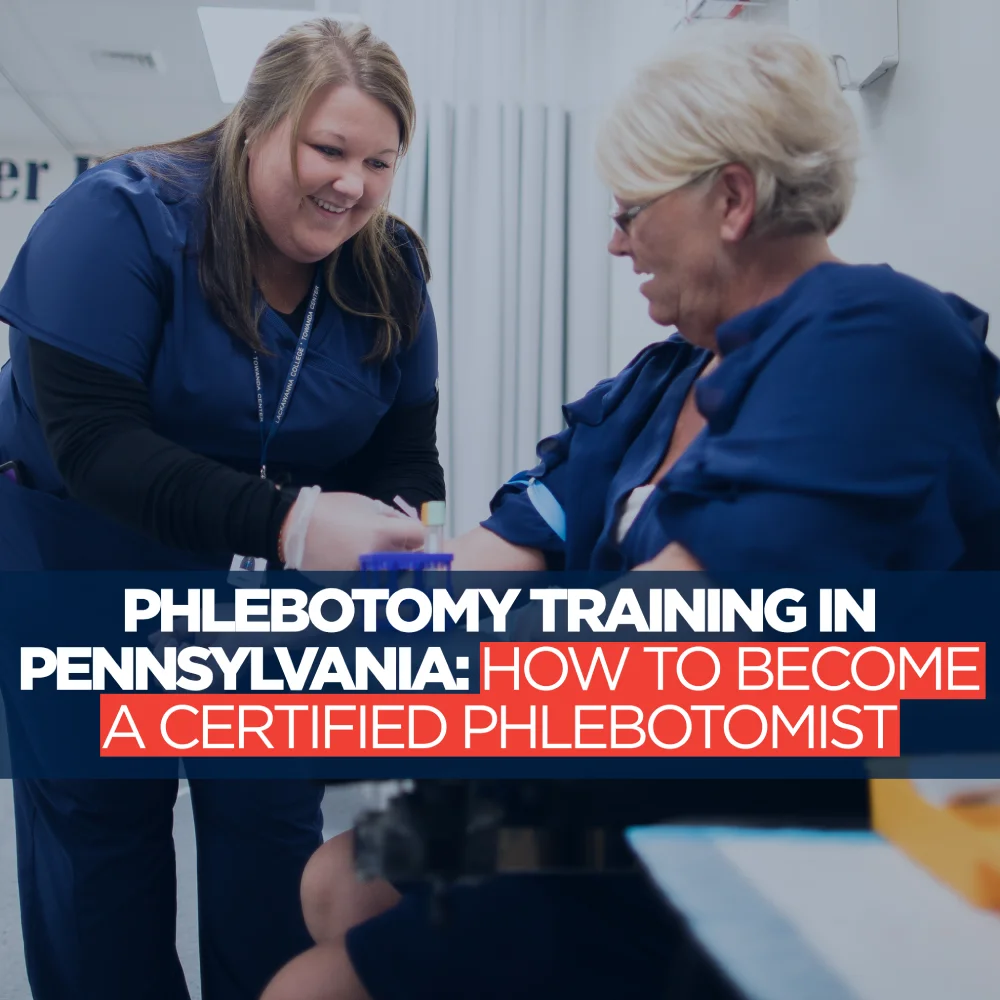
If you’re looking for a healthcare career that you can actually start in under a year — without a four-year degree, without a mountain of student debt, and without waiting around for a program acceptance letter — phlebotomy deserves a serious look. Lackawanna College, a regionally accredited, non-profit institution serving Northeast Pennsylvania since 1894, offers a Phlebotomy Technician Certificate through its Towanda Center that prepares students to sit for the NHA Certified Phlebotomy Technician (CPT) exam and step into hospital, clinic, and laboratory work. Since 2016, Lackawanna graduates have maintained a 100% first-attempt pass rate on the NHA CPT exam — compared to a national average of 85%. This guide walks through what phlebotomists actually do, what the career pays, how the certification process works in Pennsylvania, and how a short certificate program can open doors into healthcare that many people assume require years of schooling.
What Does a Phlebotomist Do?
A phlebotomist is the healthcare professional trained to draw blood from patients for laboratory testing, transfusions, research, or donation. It sounds simple, but the role sits at the center of modern medicine — almost every diagnostic decision a physician makes starts with a blood sample that a phlebotomist collected, labeled, and sent to the lab. Phlebotomists work in hospitals, physician offices, outpatient diagnostic labs, blood donation centers, urgent care clinics, and specialty practices, and they interact directly with patients during every shift.
On any given day, a phlebotomist verifies patient identity, explains the blood draw procedure to reduce anxiety, selects the appropriate equipment and vein site, performs the draw using sterile technique, labels specimens correctly to prevent lab errors, and documents the collection. The work is hands-on, requires steady precision, and rewards people who are comfortable calming nervous patients and communicating clearly with both clinical and non-clinical team members. It is also one of the most entry-accessible credentialed healthcare roles in the country — a patient-facing clinical job that does not require an associate or bachelor’s degree to begin.
Salary, Outlook, and Why Phlebotomy Is Growing
The financial case for phlebotomy training is that it produces a working healthcare wage in a short timeframe. According to the U.S. Bureau of Labor Statistics, phlebotomy is projected to grow faster than the average occupation over the coming decade, with steady hiring across hospital networks, independent laboratories, and outpatient healthcare settings. Aging population demographics, expanded diagnostic testing, and ongoing shortages of credentialed clinical staff have kept demand for phlebotomists consistently ahead of supply in most U.S. markets — and Northeast Pennsylvania is no exception.
Entry-level phlebotomists typically earn a stable hourly wage with shift differentials for evening, weekend, and holiday coverage, and experienced phlebotomists who add specialized credentials (donor phlebotomy, pediatric phlebotomy, or travel assignments) can significantly increase their earning potential. More importantly, phlebotomy is often the first step into a broader healthcare career. Many phlebotomists use their clinical experience and employer tuition assistance to move into medical assisting, medical billing and coding, nursing, or allied health programs over time — each step building on the one before it.
Key Takeaway: Phlebotomy is one of the shortest credentialed paths into healthcare, with BLS-projected growth faster than the average occupation and a clear ladder into broader clinical careers for students who want to keep advancing.
How to Become a Certified Phlebotomist in Pennsylvania
Pennsylvania does not require state-level licensure for phlebotomists the way it does for nurses, physical therapists, or massage therapists. Instead, most employers across the Commonwealth — particularly hospitals, reference labs, and diagnostic networks — require or strongly prefer candidates who hold a national phlebotomy certification. The most commonly recognized certifications nationally are the Phlebotomy Technician (PBT) credential from the American Society for Clinical Pathology (ASCP), the Certified Phlebotomy Technician (CPT) credential from the National Healthcareer Association (NHA), and the National Certified Phlebotomy Technician (NCPT) credential from the National Center for Competency Testing (NCCT). Lackawanna College’s Phlebotomy Technician Certificate specifically prepares students for the NHA CPT exam, which is widely accepted across Pennsylvania healthcare employers.
The path from interested candidate to certified phlebotomist is deliberately short. Students enroll in a phlebotomy training program that combines classroom instruction with supervised clinical hours, learn the anatomy and procedures required for safe blood collection, complete the required number of successful venipunctures, and graduate eligible to sit for a national certification exam. Most phlebotomy training programs can be completed in well under a year, which is a major reason the credential is so attractive to career-changers, recent high school graduates, and working adults looking for a fast and credible entry into healthcare.
The Phlebotomy Technician Certificate at Lackawanna College
Lackawanna College offers the Phlebotomy Technician Certificate through its Towanda Center, which serves Bradford and Sullivan Counties and the surrounding rural Northeast Pennsylvania region. Towanda is the only Lackawanna location currently offering this certificate — making it a significant regional asset for students who want credentialed healthcare training without relocating to a metro area.
The program consists of 190 class/lab hours plus a supervised clinical externship where students must complete a minimum of 100 documented venipunctures and 10 dermal punctures before graduation. Classroom instruction covers human anatomy, circulatory system fundamentals, infection control, specimen handling, equipment use, and patient communication. Clinical externship hours are where students translate that knowledge into actual patient draws under the supervision of credentialed healthcare professionals. Graduates leave the program with the hands-on venipuncture count and theoretical preparation needed to sit for the NHA Certified Phlebotomy Technician (CPT) exam — and since 2016, Lackawanna students have maintained a 100% first-attempt pass rate on that exam, compared to the national average of 85%.
The Towanda Center also offers a broader stack of healthcare credentials that extend naturally from phlebotomy, including Medical Assisting, Medical Billing and Coding, and the Pre-Allied Health pathway into advanced healthcare programs. Students can start with the Phlebotomy Technician Certificate, enter the workforce quickly, and then stack additional credentials over time — often with employer tuition assistance — to build long-term careers in healthcare. For students interested in healthcare but not sure about the long-term direction yet, phlebotomy is a low-risk, fast-payback first step. Prospective students are also encouraged to connect with Lackawanna College on LinkedIn to see where recent graduates have landed or to follow the college’s YouTube channel for student stories across the Division of Health Sciences.
Key Takeaway: Lackawanna College’s Phlebotomy Technician Certificate at the Towanda Center is the region’s credentialed on-ramp into healthcare — 190 class/lab hours plus a clinical externship, specifically preparing students for the NHA CPT exam with a 100% first-attempt pass rate since 2016.
Is Phlebotomy the Right Healthcare On-Ramp for You?
Phlebotomy rewards a specific set of traits. Students who thrive tend to be detail-oriented, comfortable working closely with patients during brief but sensitive moments, steady under pressure, and motivated to start working quickly rather than wait years for a credential. It’s a strong fit for recent high school graduates who want a healthcare job without a four-year commitment, for career-changers leaving retail, food service, or administrative work for more stable healthcare roles, for working adults in rural communities where healthcare is one of the largest and most dependable employers, and for students planning to continue into nursing, medical assisting, or allied health programs who want real clinical experience on their resume before they apply.
What phlebotomy isn’t: it isn’t a career you can practice well without clinical training, and it isn’t a credential most Pennsylvania healthcare employers will accept without national certification. Students who try to self-teach or shortcut the training will typically not pass the national exam and will not be hired. The good news is that a structured program like the one at the Towanda Center is designed specifically to get students through the training hours, the venipuncture requirements, and the exam-preparation content in a straightforward sequence. If you’re motivated, the path is clear.
Frequently Asked Questions
How long does phlebotomy training take?
Most phlebotomy training programs can be completed in under a year, often in a single semester or two, depending on the program’s structure and the student’s schedule. Lackawanna College’s Phlebotomy Technician Certificate consists of 190 class/lab hours plus a supervised clinical externship where students must complete a minimum of 100 venipunctures and 10 dermal punctures before graduation. Prospective students should speak with an admissions counselor for the current program calendar and session start dates.
Do I need a college degree to become a phlebotomist?
No. Phlebotomy is one of the entry-accessible credentialed healthcare roles specifically because it does not require an associate or bachelor’s degree. A certificate from an accredited program combined with national certification is typically all that Pennsylvania healthcare employers ask for at the time of hire.
Is phlebotomy certification required in Pennsylvania?
Pennsylvania does not require state licensure for phlebotomists. However, most hospitals, reference labs, and healthcare networks across the Commonwealth require or strongly prefer candidates who hold a national certification from a recognized body such as ASCP, NHA, or NCCT. Lackawanna College’s Phlebotomy Technician Certificate specifically prepares students for the National Healthcareer Association (NHA) Certified Phlebotomy Technician (CPT) exam, which is widely accepted by Pennsylvania healthcare employers.
What is Lackawanna’s phlebotomy exam pass rate?
Since 2016, Lackawanna College’s Phlebotomy Technician Certificate graduates have maintained a 100% first-attempt pass rate on the NHA Certified Phlebotomy Technician (CPT) exam, compared to the national average of 85%. The pass rate reflects the program’s structured combination of classroom instruction and supervised clinical externship hours at the Towanda Center.
What is the job outlook for phlebotomists?
The U.S. Bureau of Labor Statistics projects phlebotomy employment to grow faster than the average occupation over the coming decade. Demand is driven by an aging population, expanded diagnostic testing, and ongoing healthcare staffing shortages. In rural Pennsylvania markets like Bradford and Sullivan Counties, healthcare employment has been one of the most consistently growing sectors.
Can I advance my career after becoming a phlebotomist?
Yes. Phlebotomy is often a first step into a broader healthcare career. Many phlebotomists continue into medical assisting, medical billing and coding, nursing, or allied health programs — frequently with the support of employer tuition assistance. Lackawanna College’s Towanda Center offers a stack of healthcare credentials that build naturally on phlebotomy training.
Where is the Phlebotomy Technician Certificate offered at Lackawanna College?
The Phlebotomy Technician Certificate is offered at Lackawanna College’s Towanda Center, which serves Bradford and Sullivan Counties and the surrounding region. It is currently the only Lackawanna College location offering this certificate.
How much does the Phlebotomy Technician Certificate cost at Lackawanna College?
Tuition and fees vary by semester and eligibility. 95% of Lackawanna College students receive financial aid, and the Student Financial Services team works one-on-one with every student to identify federal Pell grants, Pennsylvania PHEAA state grants, institutional scholarships, and workforce development funding. Prospective students are encouraged to speak directly with an admissions counselor for current program-specific cost information.
Taking the Next Step
If phlebotomy sounds like the right kind of first step into healthcare, the next move is simple: request information about the Phlebotomy Technician Certificate at Lackawanna College’s Towanda Center, speak with an admissions counselor about start dates and financial aid, and plan a campus visit to see the program in person. Prospective students who aren’t sure whether phlebotomy is the right fit are also encouraged to explore Lackawanna’s other healthcare credentials — including Medical Assisting, Medical Billing and Coding, and the Pre-Allied Health pathway — to find the program that best matches their career goals and timeline.
Educational Disclaimer
Lackawanna College is a regionally accredited, non-profit institution of higher education. Salary, employment, and job outlook data referenced in this article are drawn from the U.S. Bureau of Labor Statistics Occupational Outlook Handbook. Career outcomes vary by individual, location, employer, and market conditions. Completion of a phlebotomy training program does not guarantee employment, certification exam success, or a specific salary outcome. Students considering the Phlebotomy Technician Certificate are encouraged to speak directly with an admissions counselor and to review the most current program information, admissions requirements, certification pathway, and outcome data at lackawanna.edu. Lackawanna College does not discriminate on the basis of race, color, national origin, sex, disability, age, religion, or any other protected class in admission or access to its educational programs, and is accredited by the Middle States Commission on Higher Education.